Everything You Need to Know About Business, You Could Have Learned From Rock & Roll

Updated: Sep 20

10 surprisingly useful business principles hiding in plain sight. +Plus one from Neil Young, one of our era’s greatest songwriters, because Neil Young deserves his own encore... plus I couldn't resist a final heartfelt lyric and business ideal from my personal favorite, the one-and-only, Mister Jimi Hendrix.
Music has never been background noise in my life. It has been my center of gravity—part compass, part teacher, part wonderfully unreliable accomplice. It has influenced where I went, how I thought, the risks I took and, eventually, the way I approached business.
Growing up on a farm in rural New Zealand—and then spending my twenties living in the rock and punk-obsessed London of the early 1980s—rock ’n’ roll opened a window onto a larger, louder and infinitely more interesting world.
The Rolling Stones. The Beatles. Heart. The Clash. Tom Petty. The Police. Eurythmics. The Sex Pistols. Bowie. Hendrix. Queen. The Smiths. The J. Geils Band. Neil Young. Bob Dylan. The Who. The Jam. Fleetwood Mac. The Pretenders. UB40. The Eagles. Culture Club. Echo & the Bunnymen. Duran Duran. Van Halen. Guns N’ Roses. Bon Jovi. Journey. Aerosmith. (... add your music influence here.)
I saved and went to their concerts, bought their records and cassettes, and absorbed the stories, attitudes and ideas embedded in their music. This was during my most formative years—when my worldview, values, identity, tastes and beliefs were still taking shape. Rock ’n’ roll didn’t simply provide the soundtrack. It helped write the story.
The music carried confidence, rebellion, imagination and possibility. It suggested that you didn’t have to accept the world exactly as you found it. You could turn up the volume and create something different.
That idea stayed with me. Through several countries, five CEO roles, countless brands, business challenges, successes and one or two spectacular wrong turns, music has remained a surprisingly reliable guide.
Rock ’n’ roll taught me about originality, performance, timing, collaboration, courage and the danger of becoming predictable. It also taught me that technical perfection is overrated if nobody feels anything.

So this is not really an article about music. It is about what music—especially rock ’n’ roll—can teach us about business, leadership and building something people genuinely care about. The lessons were there all along, hidden in the riffs, the lyrics, the bands and the beautiful noise.
We just had to listen.
Business books have given us SWOT analyses, five forces, four Ps, seven habits, balanced scorecards and enough two-by-two matrices to wallpaper a conference room.
All useful.
But a little boring,... and perhaps we’ve been looking in the wrong places.
Some surprisingly durable business advice has been hiding in our record collections for the past 60 years. Rock stars have spent decades singing about ambition, uncertainty, change, disappointment, persistence, ego, relationships, risk and occasional complete catastrophe.
Which, when you think about it, sounds remarkably like running a business.
So, with apologies to Harvard Business School, here are ten lessons in strategy, growth and leadership that rock & roll figured out first.

1. “You can’t always get what you want.”
The Rolling Stones — You Can’t Always Get What You Want
Mick Jagger probably wasn’t thinking about corporate strategy when he sang this. But he could have been.
Strategy is fundamentally about choice. Companies get into trouble when everything becomes a priority—every customer looks attractive, every new market deserves exploration, every product stays in the portfolio and every executive gets another initiative.
Eventually, the strategic plan becomes a very expensive wish list.
Strong organizations make choices. They decide where to compete, where not to compete, what they intend to be exceptional at and what they’re perfectly comfortable allowing somebody else to do. Every dollar, hour and talented person committed to one opportunity cannot simultaneously be committed to another.
Strategy isn’t deciding what to do. The difficult part is deciding what not to do.
Source: The Rolling Stones, “You Can’t Always Get What You Want,” written by Mick Jagger and Keith Richards, 1969.
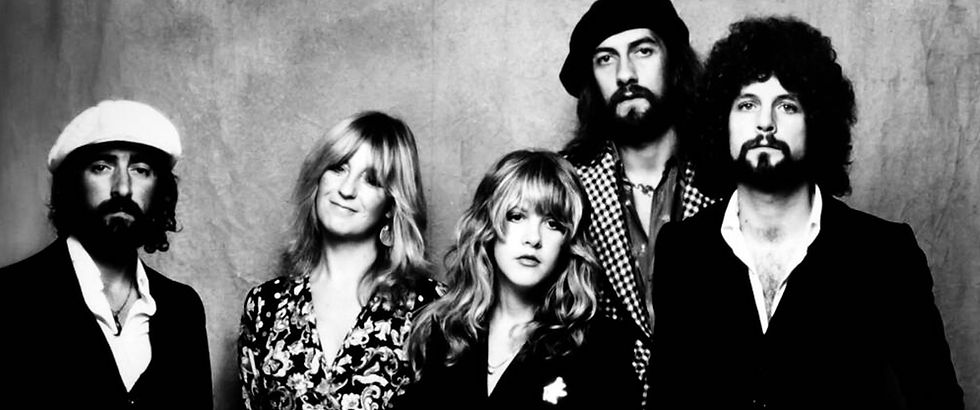
2. “You can go your own way.”
Fleetwood Mac — Go Your Own Way
Your competitor launches a new service. You launch one too. They change their messaging. You change yours. They discover AI and suddenly your homepage contains the words AI-powered eleven times.
Congratulations. You have achieved strategic conformity.
Competitive intelligence matters enormously, but its purpose isn’t imitation. It is understanding the landscape well enough to identify the spaces others haven’t occupied.
The strongest companies have a compelling answer to a deceptively simple question: Why should someone choose us instead of everybody else?
If the answer is essentially we’re really good, we care about customers and we have great people, keep working.
Great businesses don’t simply compete better. They find ways to compete differently.
Source: Fleetwood Mac, “Go Your Own Way,” written by Lindsey Buckingham, 1976.

3. “Come together, right now.”
The Beatles — Come Together
A company can have a brilliant strategy and still go nowhere.
Usually because nobody told the rest of the company.
Leadership is pursuing one objective. Marketing another. Sales has quietly invented its own positioning. Operations has different priorities. Product development is perfecting something customers stopped asking for three years ago.
Everybody is incredibly busy.
Alignment is one of the most underestimated accelerators of business performance.
Strategy, brand, culture, operations, customer experience, innovation and sales should reinforce one another. When they do, organizational energy compounds. When they don’t, enormous amounts of energy are consumed overcoming internal friction.
The Beatles themselves may not be history’s finest case study in long-term organizational alignment.
Still, they had a point.
Come together. Preferably before the annual planning meeting.
Source: The Beatles, “Come Together,” written by John Lennon and credited to Lennon–McCartney, 1969.

4. “Should I stay or should I go?”
The Clash — Should I Stay or Should I Go
Welcome to the executive meeting.
There are 74 PowerPoint slides, twelve people around the table, three consultants on Zoom and broad agreement that additional analysis would be helpful.
Nobody makes the decision.
Complex decisions rarely arrive with complete information. Waiting for certainty can feel responsible, but uncertainty doesn’t disappear because you scheduled another meeting.
Good decision-making means identifying what matters, understanding the risks, challenging assumptions and recognizing when you know enough to act. There is also a cost to not deciding: lost momentum, missed opportunities, confused employees and competitors who weren’t waiting for your next steering committee meeting.
Indecision is still a decision. It’s simply one you allowed circumstances to make for you.
Source: The Clash, “Should I Stay or Should I Go,” written by Mick Jones and credited to The Clash, 1982.

5. “A little less conversation, a little more action.”
Elvis Presley — A Little Less Conversation
There comes a moment when strategy has to leave the conference room.
Companies rarely suffer from a shortage of ideas. They suffer from an inability to convert ideas into action. The strategic plan gets approved, the presentation gets circulated, everyone congratulates everyone else—and Monday morning arrives.
Remarkably little changes.
Execution is where strategy acquires value. It requires ownership, resources, deadlines, accountability and measurable outcomes. More importantly, it requires organizational discipline: somebody actually has to do something differently tomorrow because of the decision made today.
The difference between companies that grow and companies that endlessly discuss growth is often not the quality of their ideas.
It’s what happens next.
Source: Elvis Presley, “A Little Less Conversation,” written by Mac Davis and Billy Strange, 1968.

6. “The times they are a-changin’.”
Bob Dylan — The Times They Are A-Changin’
Markets do not particularly care about your five-year plan.
Customers change. Technologies emerge. Competitors appear. Business models evolve.
Cultural expectations shift. Occasionally something arrives—hello, artificial intelligence—that challenges assumptions underlying entire industries.
The dangerous response is defending the status quo because it worked exceptionally well in the past.
Success has gravitational pull. Organizations naturally protect the products, systems and assumptions that made them successful. But yesterday’s advantage can quietly become tomorrow’s liability.
Adaptable organizations continually question what they believe to be true. They watch customers, competitors, technologies and adjacent industries, distinguishing temporary noise from structural change.
And when the evidence changes, they move.
Your history explains how you got here. It doesn’t guarantee you belong here tomorrow.
Source: Bob Dylan, “The Times They Are A-Changin’,” written by Bob Dylan, 1963.

7. “Turn and face the strange.”
David Bowie — Changes
Change sounds wonderful in a strategy presentation.
In reality, it can be deeply uncomfortable.
Transformation means challenging familiar assumptions, processes and sometimes entire business models before the replacement feels completely safe. That’s why organizations frequently say they want innovation while simultaneously constructing systems designed to prevent anything unpredictable from happening.
Real innovation requires curiosity, experimentation and tolerance for intelligent failure. It also requires leadership willing to admit: We don’t know exactly what happens next.
That is particularly relevant as AI transforms how organizations create, operate, compete and make decisions. Technology will keep changing. The differentiator will increasingly be our ability to interpret change, imagine possibilities and decide what to do about them.
Sometimes standing still is the riskiest strategy available.
Source: David Bowie, “Changes,” written by David Bowie, 1971.

8. “I want it all, and I want it now.”
Queen — I Want It All
An excellent rock anthem.
A questionable strategic planning methodology.
Growth creates temptation: more markets, more customers, more products, more acquisitions, more channels, more initiatives and, increasingly, more technology.
Organizational capacity, unfortunately, remains finite.
Focus isn’t timid. It is one of the most aggressive competitive weapons available to a business because it concentrates capital, talent, creativity and management attention on opportunities capable of producing disproportionate results.
This means leaders must become comfortable saying no—even to good ideas.
Especially to good ideas.
The greatest enemy of an extraordinary opportunity is often the collection of perfectly respectable opportunities surrounding it.
Source: Queen, “I Want It All,” credited to Queen, principally written by Brian May, 1989.

9. “Won’t get fooled again.”
The Who — Won’t Get Fooled Again
Every company makes mistakes.
The expensive ones make the same mistakes repeatedly.
Businesses generate extraordinary amounts of intelligence through their actions. Every launch, campaign, sales pitch, customer interaction, strategic initiative and failed experiment produces evidence.
The question is whether anyone learns from it.
What did we expect? What actually happened? Why was there a difference? What should we change?
Human beings are remarkably talented at explaining away inconvenient results, particularly when those results challenge decisions we personally championed. Strong leaders create cultures where changing your mind because the evidence changed isn’t weakness.
It’s intelligence.
The objective isn’t to never be fooled. It’s to avoid paying tuition for the same lesson twice.
Source: The Who, “Won’t Get Fooled Again,” written by Pete Townshend, 1971.

10. “And in the end…”
The Beatles — The End
Eventually, business becomes remarkably unforgiving.
You can have inspiring meetings, beautiful presentations, sophisticated strategies, excellent intentions and enough management terminology to require simultaneous translation.
Eventually, something has to happen.
Customers choose you—or they don’t. Employees believe in the organization—or they leave. Innovation produces value—or it doesn’t. Strategy creates competitive advantage—or it remains a document sitting in SharePoint.
This doesn’t mean every decision should be judged by next quarter’s financial results. Some of the most important investments—brand, innovation, culture, capability and customer relationships—create value over years.
But strategy ultimately exists to produce outcomes. Organizations must connect thinking to decisions, decisions to actions and actions to results.
Then learn from those results and begin again.
Eventually, reality gets a vote.
Source: The Beatles, “The End,” written by Paul McCartney and credited to Lennon–McCartney, 1969.

ENCORE: Neil Young (one of our era's greatest songwriters) [read: NPA Times-Contrarian]
11. “There’s more to the picture than meets the eye.”
Neil Young — Hey Hey, My My (Into the Black)
There may be no better line for understanding why otherwise intelligent organizations make bad decisions.
What we see first is rarely everything that matters.
Revenue is growing—but perhaps margin is deteriorating. Sales are down—but perhaps the company is abandoning low-value customers and building something stronger. A competitor appears successful—but perhaps their economics are terrible. A product fails—but perhaps it reveals the insight that creates the next one.
Business leaders live surrounded by visible information. The danger is confusing what is visible with what is important.
The best strategic thinkers look underneath the obvious. They question the numbers, assumptions, incentives, customer behavior and organizational beliefs behind what everyone else sees.
That requires curiosity—the willingness to keep looking after everyone else thinks they already understand the picture.
Because, as Neil Young and Crazy Horse reminded us on Rust Never Sleeps, “There’s more to the picture than meets the eye.” The song is credited to Neil Young and Jeff Blackburn.
And that may be one of the most useful pieces of strategic advice in the entire record collection.

12. “’Scuse me while I kiss the sky.”
Jimi Hendrix — Purple Haze
Taken literally, perhaps not the most conventional advice ever offered to a management team.
Taken metaphorically, though, Hendrix was onto something.
Businesses spend enormous amounts of time looking down: this quarter’s numbers, this week’s sales, today’s problems, the competitor who just cut their price, the customer who just complained. All of it matters. But when leaders spend too much time managing what is immediately in front of them, they can lose sight of what might be possible.
Some of the biggest opportunities require looking up.
What could this company become?
What customer need isn’t being addressed?
What assumption has everyone in the industry accepted without questioning?
What would we build if we weren’t constrained by what already exists?
Vision isn’t prediction. It is the ability to step outside the immediate demands of the business long enough to see possibilities that aren't obvious from inside them.
And that takes imagination.
You still need your feet firmly on the ground. But every now and then, somebody needs to look at the sky.
Source: The Jimi Hendrix Experience, “Purple Haze,” written by Jimi Hendrix, released in 1967.
Never confuse what you can see with everything there is to know.
Maybe Rock Stars Shouldn’t Run Your Company
To be fair, the history of rock & roll does not provide overwhelming evidence of prudent financial management, operational discipline or exemplary corporate governance.
So perhaps don’t hand Keith Richards the CFO job just yet.
But beneath the guitars, questionable hairstyles and destroyed hotel rooms are some remarkably durable ideas about business.
Choose carefully. Differentiate. Align people around what matters. Make decisions before circumstances make them for you. Execute. Adapt. Embrace intelligent change. Focus.
Learn from outcomes. Look beyond the obvious.
None of that is particularly complicated.
Doing it consistently is.
Business has become extraordinarily complex. Leaders now have access to more information, analytics, technology and artificial intelligence than any generation before them.
Yet better results don’t necessarily come from possessing more information. Increasingly, they come from thinking better about the information already in front of us.
Knowing what matters. Recognizing what doesn’t. Asking better questions. Challenging assumptions. Making choices. Acting. Watching what happens. Learning. Adjusting.
AI can process extraordinary amounts of information. It can identify patterns, model scenarios, generate possibilities and execute increasingly sophisticated tasks.
But somebody still has to decide what matters, where you’re going and why anyone should follow you there.
That’s leadership.
And apparently, it has a pretty good soundtrack.
Maybe rock stars shouldn’t run your company.
But every now and then, they have a point.
RareMatter — Strategy. Creativity. Innovation. Growth.



Comments